
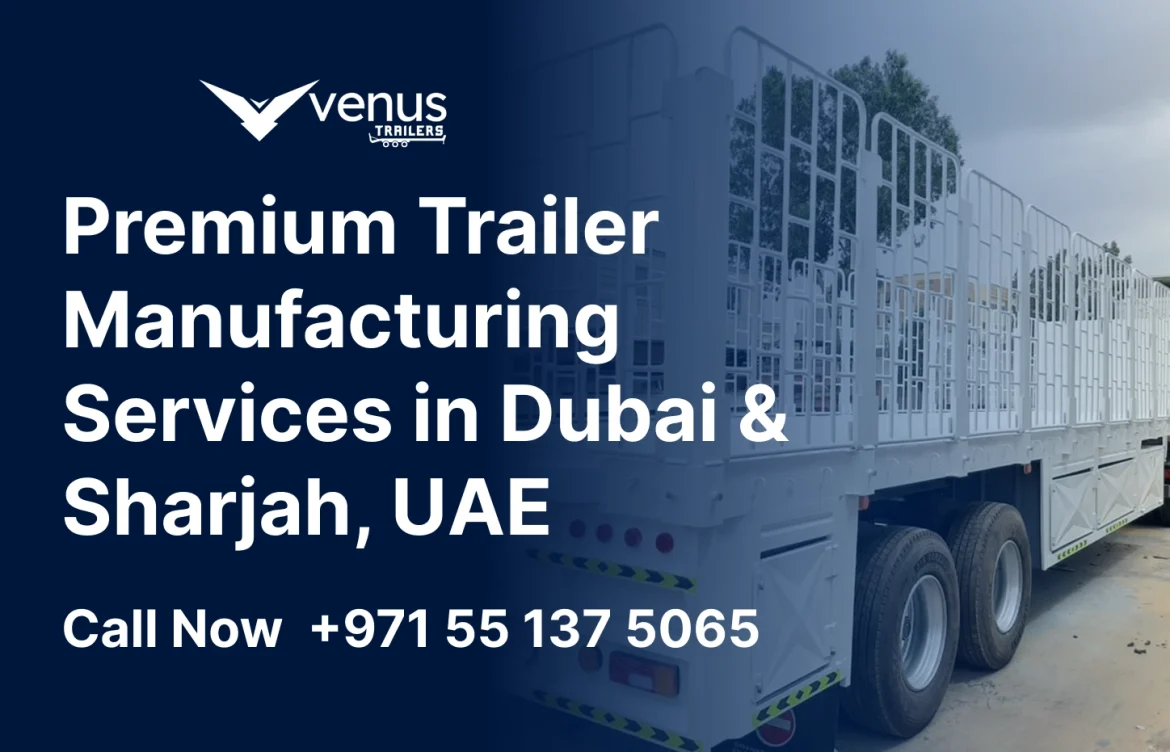
Skeleton Trailers Manufacturing in Sharjah | Strong & Reliable
Trailers Manufacturing in Sharjah Skeleton Trailers: Strong, Reliable & Built for Container Transport
Trailers Manufacturing in Sharjah Skeleton Trailers has become a critical pillar of the UAE’s fast-growing logistics and freight industry. As containerized cargo continues to dominate global trade, fleet operators and transport companies require durable, precisely engineered skeletal trailers that can handle intensive daily operations across ports, highways, and industrial zones.
At Venus Trailers, we understand that skeleton trailers are not just transport platforms—they are revenue-generating assets. Whether operating between Jebel Ali Port in Dubai, Khalid Port in Sharjah, industrial zones in Abu Dhabi, or cross-border GCC routes, your equipment must deliver consistent strength, compliance, and long-term reliability.
This guide explains everything procurement managers and fleet owners need to know about skeletal trailer manufacturing in Sharjah, from engineering standards to buyer checklists.
What Are Skeleton Trailers?
Skeleton trailers—also known as skeletal trailers—are specialized semi trailers designed specifically for transporting ISO shipping containers. Unlike flatbed trailers or box trailers, they feature an open steel chassis structure without a solid deck. This configuration reduces tare weight while maintaining exceptional structural strength.
The design focuses on:
- Supporting container corner castings
- Ensuring proper load distribution
- Minimizing dead weight
- Improving fuel efficiency
- Allowing fast loading and unloading at ports
Because they are engineered for standardized container sizes, skeletal trailers are indispensable for port operators, freight forwarders, and logistics companies throughout the UAE.
If you are comparing transport solutions, it is also worth evaluating our Flatbed Trailers, Low Bed Trailers, or Curtain Side Trailers, depending on your cargo type and operational model.
Why Sharjah Is a Leading Hub for Skeleton Trailer Manufacturing
Sharjah has evolved into one of the UAE’s most important industrial manufacturing centers. Its strategic location and robust infrastructure make it a natural hub for trailer fabrication and heavy equipment production.
Strategic Location & Port Access
Sharjah offers direct connectivity to:
- Dubai logistics corridors
- Emirates Road (E611)
- Khalid Port
- Hamriyah Port
- Major industrial areas across Ajman and Umm Al Quwain
For transport companies operating regionally, this reduces procurement and delivery lead times. Manufacturers benefit from proximity to ports, steel suppliers, and logistics networks, creating efficiencies that reflect in pricing and turnaround time.
Skilled Workforce & Engineering Expertise
High-quality skeleton trailer manufacturing in Sharjah depends on precision welding, structural calculation, and strict adherence to ISO container standards. Experienced engineers conduct:
- Load distribution analysis
- Axle weight calculations
- Chassis stress simulations
- Compliance verification with UAE transport regulations
At Venus Trailers, every skeleton trailer design undergoes structural validation to ensure durability under heavy-duty transport conditions.
Advanced Fabrication Facilities
Modern trailer manufacturing UAE facilities include:
- CNC plasma and laser cutting machines
- Submerged arc welding systems
- Robotic welding stations
- Hydraulic assembly platforms
- Sandblasting and industrial-grade paint booths
These technologies ensure repeatable quality, structural integrity, and long-term corrosion resistance—essential in coastal and desert environments.
Engineering & Technical Specifications of Skeleton Trailers
When investing in a heavy duty trailer, technical details matter more than general features. Below is a typical specification framework for skeletal trailers manufactured in Sharjah.
Common Skeleton Trailer Configurations
| Specification | 20ft Skeletal Trailer | 40ft Skeletal Trailer | Multi-Container (20/40ft) |
|---|---|---|---|
| Container Size | 1 x 20ft | 1 x 40ft | 1 x 40ft or 2 x 20ft |
| Axle Configuration | 2 or 3 Axles | 3 Axles | 3 Axles |
| Suspension | Mechanical / Air | Mechanical / Air | Air Suspension Preferred |
| Twist Locks | 4 | 8 | Adjustable Configuration |
| GVW Capacity | Up to 60 Tons | Up to 70 Tons | Up to 70+ Tons |
| Chassis Material | High-Tensile Steel | High-Tensile Steel | Reinforced Steel |
These specifications can be customized depending on:
- Port requirements
- GCC cross-border regulations
- Over-dimensional cargo needs
- Fleet standardization policies
Custom trailer design plays a key role in optimizing operations.
Key Features of High-Quality Skeleton Trailers
Reinforced Steel Chassis
The chassis is the backbone of any industrial trailer. High-grade structural steel ensures the frame withstands torsional stress and repetitive loading cycles common in container transport.
Inferior steel or poor welding can lead to:
- Frame distortion
- Premature cracking
- Uneven load distribution
- Reduced resale value
Strong chassis engineering directly affects lifetime ROI.
Twist Lock Mechanisms
ISO-certified twist locks secure containers via corner castings. Correct positioning and alignment are critical. Precision installation ensures containers remain stable even under:
- Sudden braking
- Tight cornering
- Long-distance highway transport
Axle & Suspension Systems
Depending on route type and load profile, skeletal trailers can feature:
- Mechanical suspension (robust, cost-efficient)
- Air suspension (better shock absorption and load stability)
For high-frequency fleet transport solutions, air suspension reduces cargo vibration and chassis fatigue.
Corrosion Protection Systems
Operating in Sharjah, Dubai, and coastal UAE environments exposes trailers to humidity and saline air. Therefore, industrial-grade surface protection is essential:
- Grit blasting (SA 2.5 standard)
- Epoxy primer coatings
- Polyurethane top coats
- Optional galvanization
Proper coating increases service life significantly.
Manufacturing Process: From Design to Delivery
Understanding how skeleton trailers are built helps buyers evaluate a commercial trailer manufacturer professionally.
1. Structural Design & Engineering
Engineers create 3D CAD models and conduct stress simulations. Load calculations incorporate:
- Container gross weight
- Axle load limits
- Dynamic road forces
- UAE transport authority compliance standards
2. Steel Cutting & Fabrication
High-tensile steel beams are precision-cut using CNC systems. Components are assembled in jigs to maintain dimensional accuracy.
3. Welding & Assembly
Certified welders execute structural welds using submerged arc or MIG welding processes. Weld integrity directly affects long-term durability.
4. Axles, Brakes & Landing Gear Installation
Installation includes:
- Heavy-duty axles (BPW/Saf or equivalent)
- Air brake systems with ABS (if required)
- Landing legs rated for heavy loads
- Electrical wiring and lighting systems
5. Surface Treatment & Painting
Frames undergo sandblasting and industrial coating application to ensure corrosion resistance.
6. Quality Inspection & Load Testing
Before delivery, each heavy duty trailer undergoes:
- Dimensional inspection
- Brake testing
- Alignment verification
- Load simulation checks
Only then is it dispatched to the customer.
Advantages of Choosing a Local Trailer Manufacturer in Sharjah
Selecting a local trailer supplier UAE offers operational and financial benefits.
Faster Lead Times
Importing trailers can involve extended shipping delays, customs clearance, and specification misalignments. Local manufacturing ensures quicker production and modification cycles.
Customization Flexibility
Off-the-shelf imports rarely match specific fleet standards. Local manufacturers can provide:
- Adjustable twist lock layouts
- Extended chassis designs
- Weight-optimized frames
- Fleet branding and color customization
After-Sales Support & Spare Parts Availability
Downtime directly impacts revenue. Proximity ensures:
- Readily available spare parts
- Responsive service teams
- Chassis repair and reinforcement services
- Warranty-backed support
For fleet owners operating across Abu Dhabi, Dubai, Sharjah, and Ras Al Khaimah, local support reduces operational risk.
Industries That Depend on Skeletal Trailers
Skeleton trailers are fundamental across multiple sectors:
- Shipping & Port Operations
- Freight Forwarding & Logistics Companies
- Construction Material Transport
- Oil & Gas Equipment Movement
- Warehouse & Distribution Networks
- Government Infrastructure Projects
Any operation using ISO containers relies on properly engineered skeletal semi trailers.
For alternative applications, businesses often combine skeleton trailers with Box Trailers, Fuel Tank Trailers, Water Tank Trailers, Tipper Trailers, or Cement Bulkers to diversify fleet capabilities.
How to Choose the Right Skeleton Trailer Manufacturer
Before selecting a trailer manufacturing UAE partner, ask the following:
- What grade of steel is used for the chassis?
- Are structural load calculations documented?
- Does the manufacturer comply with UAE transport regulations?
- Are axles and braking systems internationally certified?
- What is the warranty coverage?
- Is after-sales service available across the UAE?
Visiting the production facility is strongly recommended. A professional manufacturer will maintain organized welding stations, documented inspection procedures, and visible quality control systems.
The Future of Skeleton Trailer Manufacturing in Sharjah
The demand for high-performance industrial trailers continues to grow due to:
- Expansion of UAE ports
- Regional trade corridors
- Infrastructure megaprojects
- Increased containerization
Future-focused manufacturers are investing in:
- Lightweight high-tensile steel
- Improved suspension design
- Smart fleet monitoring integration
- Advanced robotic welding systems
These improvements enhance fuel efficiency, safety, and asset lifespan—key factors for competitive fleet operators.
Conclusion
Trailers Manufacturing in Sharjah Skeleton Trailers remains a driving force behind the UAE’s logistics and freight sector. Businesses operating across Dubai, Sharjah, Abu Dhabi, and the wider GCC region depend on durable, precision-engineered skeletal trailers to maintain efficient container transport operations.
By partnering with an experienced commercial trailer manufacturer like Venus Trailers, companies gain more than a product—they gain engineered fleet transport solutions tailored to demanding regional conditions.
From structural integrity to compliance and after-sales support, the right manufacturing partner ensures long-term operational success.
Frequently Asked Questions (FAQs)
1. What is the load capacity of a skeletal trailer in the UAE?
Most skeletal trailers manufactured in Sharjah offer gross vehicle weight capacities between 60 to 70 tons, depending on axle configuration and suspension type. Three-axle configurations are common for 40ft containers. However, compliance with UAE transport regulations and road authority limits must always be verified. A trusted commercial trailer manufacturer will provide load calculation documentation to ensure safe and legal operations.
2. What is the difference between a skeleton trailer and a flatbed trailer?
A skeleton trailer is specifically designed for carrying shipping containers and includes twist locks for secure attachment. A flatbed trailer features a full deck surface and is suitable for general cargo, machinery, or palletized loads. Skeleton trailers are lighter, more fuel-efficient, and optimized for containerized freight. Flatbeds provide more flexibility for oversized or non-containerized cargo.
3. Can skeletal trailers be customized for different container sizes?
Yes. Custom trailer design allows configurations for 20ft, 40ft, or dual 20ft containers. Adjustable twist lock systems and extendable chassis options are also available. Many transport companies in Dubai and Abu Dhabi request tailored configurations based on port contracts or fleet standardization requirements. Customization ensures maximum operational efficiency.
4. How long does a skeleton trailer last?
With proper maintenance and corrosion protection, a high-quality skeleton trailer can operate efficiently for 10–15 years or more. Lifespan depends on usage intensity, load frequency, and environmental exposure. Regular inspections, brake servicing, and chassis checks significantly extend service life.
5. Are air suspension systems better than mechanical suspension?
Air suspension provides improved load stability, reduced vibration, and better tire longevity. It is ideal for high-frequency logistics operations and long-haul routes. Mechanical suspension is more cost-effective and robust for heavy-duty, rugged applications. The right choice depends on operating conditions and budget considerations.
6. Why choose a local trailer supplier in the UAE instead of importing?
Choosing a local trailer supplier UAE ensures faster delivery, easier customization, regulatory compliance, and accessible after-sales support. Imported trailers may require modifications to meet UAE standards. Local manufacturers also understand regional climate and operational conditions, which improves product reliability.
Request a Free Trailer Consultation
If you are planning to expand your fleet or require custom container transport solutions, Venus Trailers offers expert consultation and manufacturing support.
We provide:
- Technical trailer recommendations
- Custom trailer design & engineering
- Manufacturing consultation
- Detailed project quotations
Venus Trailers proudly serves logistics companies, contractors, government entities, and heavy transport operators across Dubai, Sharjah, Abu Dhabi, Ajman, Ras Al Khaimah, Fujairah, and the wider UAE.
Contact our team today to discuss your skeletal trailer requirements and receive a professional manufacturing consultation tailored to your operational needs.