
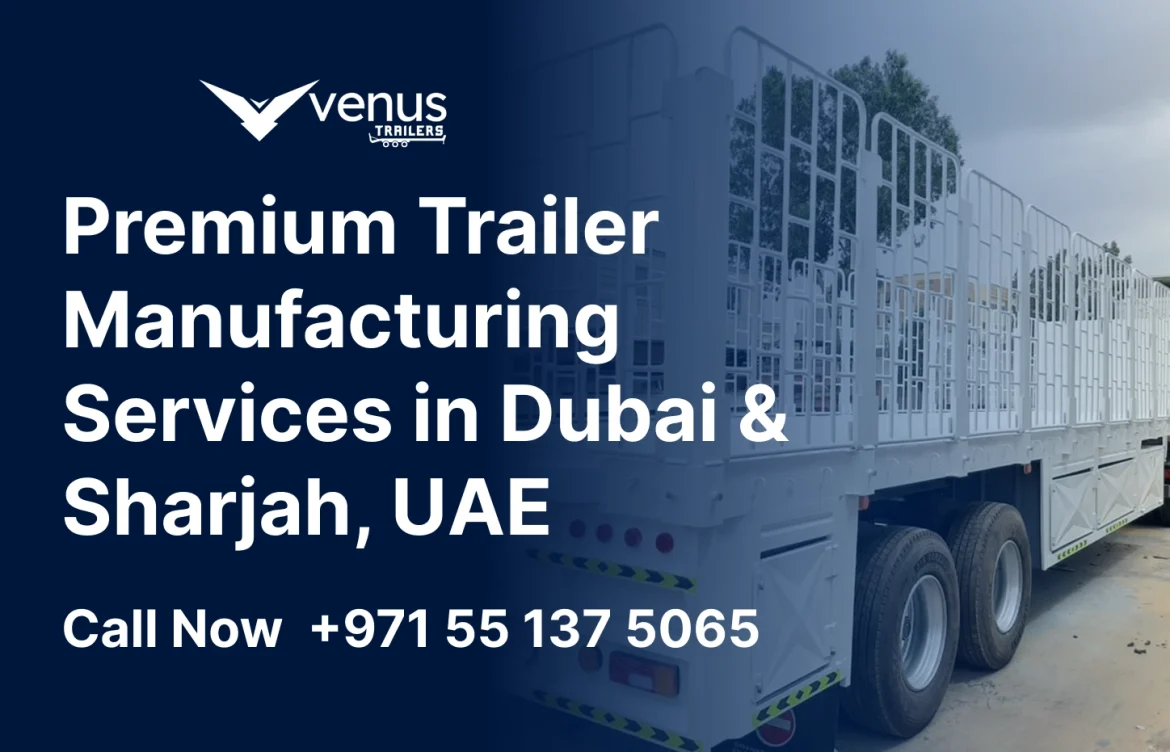
Trailer Manufacturing’s Vital Role in UAE Logistics Industry
Role of Trailer Manufacturing in the UAE Logistics Industry
The role of trailer manufacturing in the UAE logistics industry has become increasingly strategic as the country strengthens its position as a global trade and distribution hub. Located at the crossroads of Asia, Europe, and Africa, the UAE relies heavily on efficient road transport to connect ports, free zones, airports, and industrial clusters across Dubai, Abu Dhabi, Sharjah, and the Northern Emirates.
While world-class infrastructure often receives the spotlight, the backbone of national logistics lies in high-performance commercial trailers engineered for regional demands. From container transport at Jebel Ali Port to heavy equipment movement for construction projects in Abu Dhabi or oil & gas operations in the Western Region, trailer manufacturing in the UAE directly impacts supply chain speed, reliability, and cost efficiency.
This article explores how trailer manufacturers support economic growth, what types of trailers dominate the market, and what fleet owners should consider when choosing a commercial trailer manufacturer in the UAE.
UAE Logistics Industry: Why Road Transport Dominates
The UAE’s logistics sector is one of the most advanced in the Middle East, driven by:
- Strategic geographic location
- Modern ports such as Jebel Ali, Khalifa Port, and Port Rashid
- Extensive highway networks connecting all seven emirates
- Rapid growth of e-commerce and last-mile distribution
- Government investment in industrial corridors and free zones
Although air and sea freight play major roles in global trade, road transport moves the majority of cargo once it enters the country. Containers, construction materials, fuel, machinery, and retail goods all depend on semi trailers and heavy-duty trailer systems for inland distribution.
Without reliable trailer manufacturing, fleet transport solutions would suffer from:
- Increased cargo damage
- Vehicle downtime
- Regulatory non-compliance
- Higher operating costs
- Slower turnaround times at ports
In short, road freight performance in the UAE is only as strong as the trailers pulling the load.
What Is Trailer Manufacturing?
Trailer manufacturing involves the design, engineering, fabrication, and assembly of towable transport units used for cargo movement. Unlike ready-made imports, locally engineered industrial trailers are built to match:
- UAE climate and heat conditions
- GCC axle load regulations
- Long-distance highway usage
- Off-road construction site requirements
- Industry-specific applications
A modern commercial trailer manufacturer does far more than weld steel. The process includes structural analysis, load distribution calculations, hydraulic system integration, suspension engineering, braking compatibility, and compliance testing.
Core Manufacturing Stages
- Concept design and load analysis
- Structural engineering and drafting
- Chassis fabrication
- Axle and suspension integration
- Electrical and braking system installation
- Surface treatment and corrosion protection
- Testing and quality control
Manufacturers like Venus Trailers combine trailer fabrication expertise with practical industry insight to produce reliable fleet assets tailored for UAE operators.
Types of Trailers Used in the UAE Logistics Sector
Different industries demand specialized transport equipment. Below is an overview of the most common trailer types used across Dubai, Sharjah, Abu Dhabi, and the broader UAE.
1. Flatbed Trailers
Flatbed trailers are one of the most versatile fleet assets. They are commonly used for transporting:
- Steel structures
- Construction materials
- Palletized goods
- Industrial equipment
Open-deck design allows easy side and top loading, making them ideal for cranes and forklifts.
2. Skeletal (Skeleton) Trailers
Skeletal trailers are engineered for container transport. They dominate operations at ports and logistics hubs by accommodating 20ft, 40ft, and 45ft containers.
Key advantages:
- Lightweight chassis
- Efficient container locking systems
- Faster port turnaround
3. Low Bed Trailers
Low bed trailers are essential for heavy equipment transport. These units carry:
- Excavators
- Bulldozers
- Cranes
- Oilfield machinery
Their low deck height ensures compliance with height restrictions while maintaining load stability.
4. Box and Curtain Side Trailers
Used heavily in retail and FMCG distribution, these trailers provide cargo protection. Curtain side trailers offer flexible side access, while box trailers ensure full enclosure and security.
5. Tipper Trailers
Widely used in construction and infrastructure projects, tipper trailers are designed for bulk materials such as sand, aggregates, and gravel.
6. Fuel Tankers, Water Tankers, and Cement Bulkers
These tank-based trailer systems serve oil & gas, utilities, and ready-mix industries. Engineering precision is critical due to liquid surge dynamics and hazardous material regulations.
Importance of Trailer Manufacturing in the UAE Logistics Industry
1. Supply Chain Efficiency
Efficient semi trailers ensure smooth cargo flow from ports to inland destinations. High-quality suspension systems, optimized load distribution, and corrosion-resistant components reduce unexpected downtime.
When logistics companies operate in high-volume environments like Jebel Ali or Khalifa Port, delayed trailers directly impact delivery schedules and contractual commitments.
2. Heavy Equipment and Industrial Transport
Infrastructure expansion across the UAE demands reliable heavy-duty trailer solutions. Whether supporting construction in Dubai South or energy projects in Abu Dhabi, properly engineered low bed trailers ensure:
- Stable weight distribution
- Safe braking performance
- Road compliance
- Reduced mechanical strain
3. Cost Predictability and Fleet ROI
Cheap imports may appear attractive initially but often lead to higher lifecycle costs. Professionally engineered industrial trailers provide:
- Longer structural lifespan
- Lower repair frequency
- Better tire performance
- Improved fuel efficiency due to optimized weight
Fleet owners benefit from stronger return on investment through durable local manufacturing.
4. Regulatory Compliance
The UAE enforces strict transport and safety regulations. A reliable trailer supplier in the UAE ensures compliance with:
- Axle load limits
- Brake system standards
- Lighting and reflectivity requirements
- Tanker safety codes
Compliance minimizes fines and operational disruptions.
Sharjah: A Key Hub for Trailer Manufacturing UAE
Sharjah has emerged as a major center for trailer manufacturing UAE operations due to:
- Industrial zones with heavy fabrication facilities
- Skilled engineering and welding workforce
- Central location between Dubai and Northern Emirates
- Competitive production efficiencies
Many leading commercial trailer manufacturers operate from Sharjah while serving clients across:
- Dubai logistics companies
- Abu Dhabi infrastructure contractors
- Ajman and Umm Al Quwain transport fleets
- Ras Al Khaimah industrial businesses
This geographic advantage enables faster project timelines and responsive after-sales support.
Technological Advancements in Modern Trailer Engineering
The role of trailer manufacturing in the UAE logistics industry is evolving with technology integration.
Lightweight High-Strength Steel
Advanced materials reduce overall trailer weight while maintaining load capacity. The result:
- Better fuel economy
- Increased payload
- Lower emissions
Smart Tracking & Fleet Integration
GPS integration and telematics systems enable:
- Real-time cargo tracking
- Fleet route optimization
- Theft prevention
- Predictive maintenance alerts
Advanced Suspension & Braking Systems
Air suspension systems improve:
- Cargo stability
- Driver comfort
- Reduced cargo damage
Advanced braking systems enhance safety during heavy equipment transport across long-haul routes.
Corrosion Protection for GCC Climate
Heat and humidity accelerate wear. Modern trailer fabrication includes:
- Shot blasting
- Anti-corrosion coatings
- High-quality paint systems
These features extend trailer lifespan in coastal and desert environments.
How to Choose the Right Commercial Trailer Manufacturer in the UAE
Fleet owners and procurement managers should evaluate manufacturers using structured criteria.
Trailer Manufacturer Evaluation Checklist
| Criteria | Why It Matters |
|---|---|
| Engineering Capability | Ensures structural integrity and load optimization |
| Custom Trailer Design Experience | Necessary for specialized applications |
| Quality Control Process | Prevents manufacturing defects |
| Compliance Knowledge | Avoids regulatory penalties |
| After-Sales Support | Reduces downtime |
| Local Service Availability | Crucial for fast maintenance |
Common Mistakes to Avoid
- Choosing based solely on price
- Ignoring axle and suspension quality
- Overlooking future scalability needs
- Failing to confirm spare parts availability
- Buying trailers not suited to UAE climate
Partnering with an experienced trailer supplier in the UAE ensures long-term operational stability rather than short-term cost savings.
Challenges Facing the UAE Logistics Sector
Despite impressive growth, several challenges remain:
Rising Fuel Costs
Fuel price fluctuations directly affect fleet profitability. Lightweight trailer engineering and aerodynamic improvements help mitigate operating costs.
Demand for Faster Delivery
E-commerce growth requires rapid turnaround. Reliable semi trailers with minimal downtime become mission-critical assets.
Maintenance and Downtime
High temperatures and long-haul routes stress suspension, tires, and braking systems. Preventive maintenance strategies are essential.
Regulatory Pressure
Transport authorities periodically update road safety and weight regulations. Manufacturers must stay informed and adapt designs accordingly.
Future of Trailer Manufacturing in the UAE Logistics Industry
The future of the role of trailer manufacturing in the UAE logistics industry will be shaped by:
- Customized fleet transport solutions
- Increased automation in fabrication
- Data-driven maintenance systems
- Sustainable material usage
- Electrification compatibility
As government mega-projects continue and industrial diversification accelerates, demand for heavy-duty trailers and advanced trailer engineering will rise.
Local manufacturers are positioned to respond faster to evolving market needs compared to overseas suppliers, giving UAE-based companies a strategic advantage.
Conclusion
The role of trailer manufacturing in the UAE logistics industry extends far beyond metal fabrication. It directly influences supply chain performance, infrastructure development, industrial growth, and national trade efficiency.
From flatbed trailers supporting construction in Dubai to low bed trailers handling heavy equipment in Abu Dhabi, and skeletal trailers transporting containers across Sharjah’s industrial zones, commercial trailers form the operational backbone of UAE logistics.
As fleet operators demand smarter, safer, and more durable solutions, trailer manufacturing in the UAE continues evolving through innovation, engineering precision, and localized expertise.
Request a Free Trailer Consultation
If you are planning to expand your fleet, launch a transport project, or invest in custom-built transport equipment, Venus Trailers offers expert guidance tailored to your operational goals.
As a leading commercial trailer manufacturer serving Dubai, Sharjah, Abu Dhabi, and the wider UAE, Venus Trailers provides:
- Custom trailer design and engineering
- Semi trailers and heavy-duty trailer manufacturing
- Fuel tankers, cement bulkers, and tipper trailers
- Industrial trailer fabrication
- Project-based transport solutions
- Manufacturing consultations and quotations
Contact Venus Trailers to request a free trailer consultation and discuss your fleet requirements with experienced professionals.
Frequently Asked Questions (FAQs)
1. Why is trailer manufacturing important for the UAE logistics industry?
Trailer manufacturing supports the UAE logistics sector by providing road transport equipment built for regional conditions and regulations. High-quality semi trailers and heavy-duty trailers ensure efficient cargo movement between ports, warehouses, and industrial facilities. Without reliable trailer engineering, supply chains would face delays, safety risks, and higher operational costs. Local manufacturing also allows customization to suit oil & gas, construction, and retail industries across Dubai, Sharjah, and Abu Dhabi.
2. What types of trailers are most commonly used in the UAE?
The most commonly used trailers include flatbed trailers, skeletal trailers for container transport, low bed trailers for heavy equipment transport, box trailers for enclosed cargo, curtain side trailers for flexible loading, and tipper trailers for construction materials. Fuel tank trailers, water tank trailers, and cement bulkers are widely used in oil & gas and infrastructure sectors. Each type serves specific operational requirements within the logistics ecosystem.
3. How do I choose the right commercial trailer manufacturer in the UAE?
Select a manufacturer with proven experience in trailer fabrication, structural engineering capability, and regulatory compliance knowledge. Evaluate quality control procedures, custom trailer design expertise, after-sales support, and spare parts availability. A reputable trailer supplier UAE-based company should provide technical consultations and tailored fleet transport solutions rather than offering generic products.
4. Are locally manufactured trailers better than imported trailers?
Locally manufactured trailers are typically better suited for the UAE climate and regulatory environment. They are engineered to handle high temperatures, heavy highway usage, and GCC axle load standards. Additionally, local manufacturers provide faster support, spare parts access, and customization options. Imported trailers may require modifications and can cause delays if servicing or replacements are needed.
5. How does trailer design impact fuel efficiency?
Trailer weight, aerodynamics, axle alignment, and suspension systems all affect fuel consumption. Lightweight high-strength materials increase payload capacity without increasing gross weight. Proper load distribution reduces engine strain, while optimized engineering improves rolling resistance. Investing in well-designed industrial trailers can significantly lower long-term operating expenses.
6. What industries rely most on heavy-duty trailers in the UAE?
Construction, oil & gas, container logistics, infrastructure development, utilities, and industrial manufacturing all rely heavily on heavy-duty trailer solutions. Ports in Dubai and Abu Dhabi depend on skeletal trailers for container movement, while contractors use low bed trailers for heavy equipment transport. Tanker trailers are essential for fuel and water supply operations.
7. How long does a commercial trailer typically last in the UAE?
With proper maintenance and quality manufacturing, a commercial trailer in the UAE can last 10–15 years or more. Lifespan depends on usage intensity, maintenance practices, loading habits, and environmental exposure. Investing in corrosion protection, axle quality, and preventive servicing significantly extends trailer durability and protects fleet investment.