
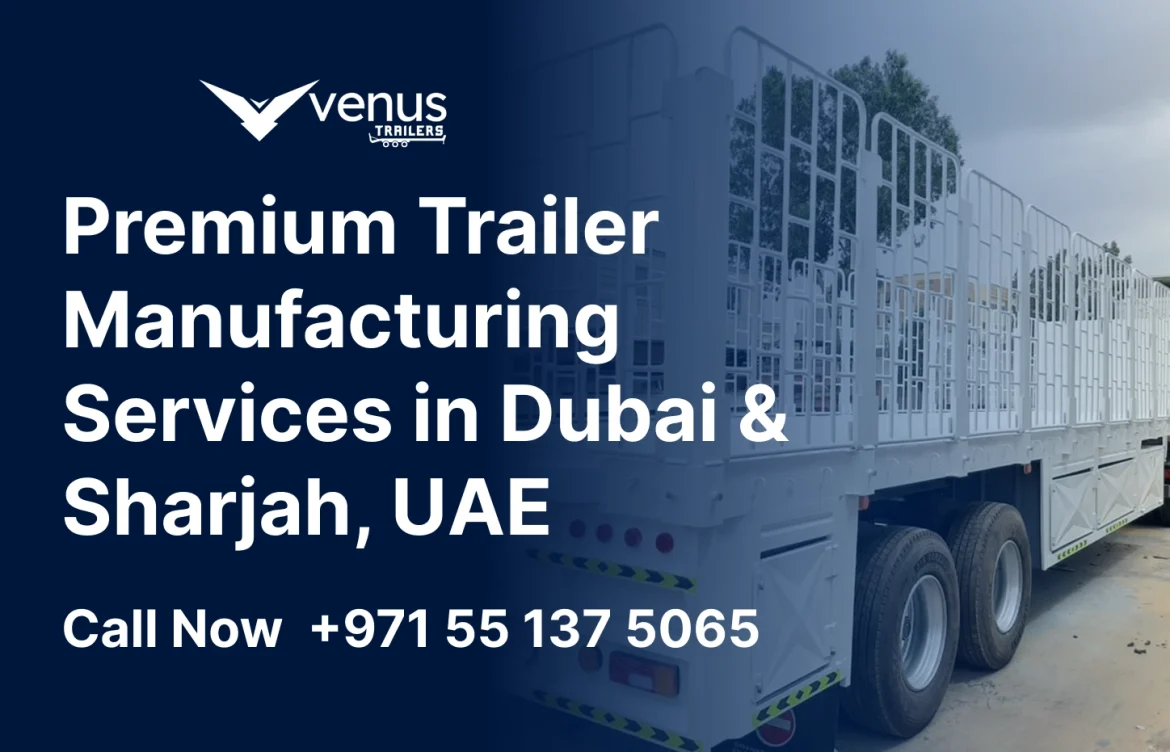
Flat Bed Trailers Manufacturing Sharjah | Durable, Custom Engineered
Flat Bed Trailers Manufacturing In Sharjah: Quality, Durability & Custom Engineering
Flat Bed Trailers Manufacturing in Sharjah has become a critical service for businesses that depend on safe, efficient, and heavy-duty transport solutions across the UAE and GCC. From construction contractors in Dubai to oil & gas operators in Abu Dhabi and logistics companies operating through major UAE ports, demand for durable flatbed trailers continues to grow.
Sharjah has evolved into a leading industrial hub for Trailer Manufacturing UAE, combining engineering expertise, advanced fabrication facilities, and strong regulatory standards. For fleet owners and procurement managers, choosing the right commercial trailer manufacturer in Sharjah is not just about price—it is about performance, compliance, customization capability, and long-term return on investment.
This guide explores how flatbed trailers are engineered, what differentiates high-quality manufacturers, and how to select the right heavy duty trailer partner for your operation.
Why Flatbed Trailers Are Essential for Heavy Transport in the UAE
Flatbed trailers remain one of the most versatile transport platforms in the commercial transport industry. Unlike enclosed units, they offer an open deck structure, enabling easy loading and unloading from multiple angles. This makes them ideal for crane-assisted and forklift-assisted operations commonly used on construction sites and industrial facilities.
Industries That Rely on Flatbed Trailers
Flatbed trailers are widely used in:
- Construction and infrastructure development
- Oil & gas operations
- Steel and structural fabrication industries
- Modular building transport
- Port and logistics operations
- Heavy equipment transport companies
- Government and municipal projects
In the UAE, where infrastructure expansion continues across Dubai, Abu Dhabi, Sharjah, and Northern Emirates, the ability to transport oversized cargo safely is essential. Flatbed trailers can handle steel beams, concrete elements, pipes, transformers, generators, and industrial machinery with ease.
For cargo requiring lower load heights or specialized heavy machinery positioning, many operators also evaluate Low Bed Trailers, which complement flatbed units in mixed fleets.
Why Sharjah Is a Leading Hub for Trailer Manufacturing UAE
Sharjah’s industrial ecosystem has positioned the emirate as a strategic center for industrial trailer manufacturing.
1. Strategic Geographic Advantage
Sharjah offers immediate road connectivity to Dubai, Abu Dhabi, Ajman, Ras Al Khaimah, Fujairah, and Umm Al Quwain. Access to ports and free zones supports efficient export to GCC countries and Africa. For fleet operators, this reduces delivery time and simplifies logistics coordination.
2. Established Industrial Zones
Sharjah’s industrial areas are equipped with:
- Heavy steel fabrication workshops
- CNC plasma and laser cutting systems
- Automated welding lines
- Shot blasting and painting facilities
- Dedicated quality inspection bays
This infrastructure supports precision trailer fabrication and consistent production standards.
3. Skilled Engineering Workforce
Experienced structural engineers, certified welders, and mechanical assembly specialists contribute to high-quality trailer engineering. Reputable manufacturers follow international welding codes and structural design standards to ensure long-term reliability.
4. Regulatory Alignment
Manufacturers in Sharjah operate in compliance with UAE transport regulations. This ensures roadworthy braking systems, lighting compliance, axle load limitations, and proper chassis reinforcement suitable for GCC conditions.
For businesses seeking a reliable trailer supplier UAE, working with a Sharjah-based manufacturer provides both technical expertise and geographic advantage.
The Engineering & Manufacturing Process of Flatbed Trailers
Understanding how a flatbed trailer is built helps procurement teams evaluate quality beyond surface appearance.
1. Custom Trailer Design & Engineering
Every project begins with a structural assessment based on:
- Payload capacity
- Axle configuration (2-axle, 3-axle, multi-axle)
- Suspension type (mechanical or air suspension)
- Deck length and width
- Loading method
- Route and terrain conditions
Advanced CAD software is used to model stress distribution and chassis reinforcement. Proper load analysis prevents frame fatigue and extends operational lifespan.
2. Material Selection
High-tensile structural steel is commonly used for the main beams and cross members. The grade selection directly impacts:
- Load-bearing strength
- Trailer weight optimization
- Impact resistance
- Fatigue performance
Corrosion-resistant coatings are particularly important in the UAE’s hot climate and coastal environments such as Dubai and Fujairah.
3. Chassis Fabrication & Welding
Precision cutting ensures structural symmetry. Certified welders perform critical joints on:
- Main I-beams
- Cross members
- Kingpin plate
- Axle mounting points
Improper welding is one of the leading causes of chassis failure. High-quality commercial trailer manufacturers enforce strict quality inspections at this stage.
4. Axle, Suspension & Brake Integration
Selection of axles and braking systems depends on intended load class. Heavy duty trailer units may use:
- Multi-axle configurations
- Air suspension systems for smoother load handling
- Advanced braking systems meeting UAE road standards
Reliable suspension improves tire life and vehicle stability.
5. Surface Treatment & Finishing
After fabrication, components undergo:
- Shot blasting
- Anti-rust primer coating
- Industrial-grade paint application
Proper surface treatment significantly extends service life, particularly in high-humidity port environments.
6. Testing & Quality Inspection
Before delivery, flatbed trailers undergo:
- Load simulation tests
- Brake system inspection
- Electrical system verification
- Dimensional accuracy checks
A professional manufacturer documents these checks to ensure compliance and traceability.
Key Specifications of a High-Quality Flatbed Trailer
| Specification | Typical Range | Why It Matters |
|---|---|---|
| Load Capacity | 30–80 Tons | Determines operational versatility |
| Axle Configuration | 2–4 Axles | Affects load distribution and road compliance |
| Deck Length | 12m–15m (customizable) | Impacts cargo flexibility |
| Suspension | Mechanical / Air | Influences ride stability |
| Chassis Material | High-Tensile Steel | Enhances durability |
| Brake System | Air Brake System | Ensures safety and compliance |
Customization options may include extendable platforms, twist locks for containers, reinforced flooring, or side rails depending on operational needs.
Benefits of Choosing Local Flat Bed Trailers Manufacturing In Sharjah
Faster Turnaround
Local production significantly reduces delivery time. Fleet expansion projects can proceed without long international shipping delays.
Greater Customization Flexibility
Working directly with engineers enables custom trailer design adjustments for:
- Overlength cargo
- Specialized construction loads
- Port container operations
- Oilfield equipment transport
This level of flexibility is often limited when purchasing imported standard models.
Reliable After-Sales Support
A Sharjah-based commercial trailer manufacturer can provide:
- Spare parts availability
- Structural repairs
- Axle and brake system servicing
- Warranty support
Fast service reduces downtime and protects fleet productivity.
Cost Efficiency Over Lifecycle
While upfront costs vary, locally manufactured trailers often reduce:
- Maintenance expenses
- Replacement part costs
- Repair lead times
Over 5–10 years of operation, this significantly improves ROI.
Flatbed vs Other Trailer Types: When to Choose What?
| Trailer Type | Best For | Key Advantage |
|---|---|---|
| Flatbed Trailer | Steel, construction materials, machinery | Loading flexibility |
| Low Bed Trailer | Heavy equipment like excavators | Lower loading height |
| Skeletal Trailer | Container transport | Lightweight and efficient |
| Box Trailer | Enclosed goods | Weather protection |
| Curtain Side Trailer | Palletized cargo | Quick side access |
Many fleet operators in Dubai and Abu Dhabi maintain mixed fleets, combining flatbeds with skeletal trailers and semi trailers for operational efficiency.
How to Choose the Right Commercial Trailer Manufacturer
Selecting the right trailer supplier UAE requires careful evaluation.
1. Experience & Portfolio
Look for demonstrated experience in manufacturing heavy duty trailers for sectors similar to yours. Ask for case studies or references.
2. Engineering Capability
A professional manufacturer should offer in-house trailer engineering, not just assembly. Structural design validation is critical for heavy equipment transport.
3. Compliance with UAE Standards
Ensure the manufacturer adheres to RTA and federal transport requirements.
4. Facility Inspection
Visiting the workshop in Sharjah allows you to evaluate:
- Fabrication quality
- Welding standards
- Material handling
- Quality control systems
5. After-Sales Commitment
Ask about warranty coverage, turnaround time for repairs, and spare parts stock.
Maintenance Best Practices for Flatbed Trailers
Even the best-built trailer requires routine care to maintain safety and lifespan.
- Inspect weld joints regularly
- Check axle alignment and suspension performance
- Monitor brake system functionality
- Repaint exposed steel areas when needed
- Avoid overloading beyond rated capacity
- Conduct scheduled fleet inspections
Preventive maintenance reduces downtime and prevents costly structural damage.
The Future of Flat Bed Trailers Manufacturing In Sharjah
The UAE’s infrastructure vision continues to drive innovation in trailer manufacturing. Emerging improvements include:
- Weight-optimized chassis designs
- Advanced high-strength steels
- Improved aerodynamic design for better fuel efficiency
- Enhanced air suspension systems
- Longer-lasting corrosion-resistant coatings
As logistics operations modernize, manufacturers are aligning trailer engineering with fleet telematics and operational efficiency standards.
Sharjah remains at the forefront of these advancements, making it a strategic location for businesses seeking reliable Fleet Transport Solutions.
Conclusion
Flat Bed Trailers Manufacturing in Sharjah plays an essential role in supporting heavy transport across construction, oil & gas, logistics, and industrial sectors in the UAE. With advanced trailer fabrication facilities, experienced engineers, and compliance with regional standards, Sharjah-based manufacturers provide durable and customized solutions built for demanding conditions.
For procurement managers and transport operators, choosing the right commercial trailer manufacturer ensures long-term performance, safety compliance, and minimized downtime. Investing in a properly engineered heavy duty trailer today directly impacts operational efficiency for years to come.
Frequently Asked Questions (FAQs)
1. Why choose Flat Bed Trailers Manufacturing In Sharjah instead of importing trailers?
Manufacturing in Sharjah offers faster delivery, easier customization, and accessible after-sales support. Imported trailers may meet general specifications, but they often lack region-specific design adjustments for UAE climate and load conditions. Local manufacturers also ensure compliance with UAE transport regulations. Over the long term, reduced maintenance delays and spare part availability provide better operational efficiency for fleet owners.
2. What load capacity should I choose for a heavy duty flatbed trailer?
The correct load capacity depends on the type of cargo you transport. Most heavy duty trailers in the UAE range between 30 and 80 tons. Engineering teams evaluate axle configuration, road regulations, and route conditions before recommending capacity. Selecting a trailer with insufficient structural support can lead to fatigue damage, while over-specifying increases unnecessary weight and fuel consumption. Always consult a qualified trailer engineering team.
3. How long does it take to manufacture a custom flatbed trailer in the UAE?
Production timelines typically range from a few weeks to a couple of months depending on complexity, customization, and production load. Standard flatbed trailers require less time, while custom trailer design projects involving special reinforcements or unique dimensions may require detailed engineering analysis. Working with a reputable commercial trailer manufacturer ensures transparent project timelines.
4. What is the difference between a flatbed trailer and a low bed trailer?
A flatbed trailer has a standard deck height and is suitable for general heavy cargo. A low bed trailer features a dropped deck design that lowers the cargo platform, making it ideal for transporting tall heavy equipment such as excavators and bulldozers. Selecting between them depends on cargo height, weight, and loading method.
5. How do I evaluate the quality of a trailer fabrication facility?
Inspect welding quality, material storage conditions, fabrication equipment, and quality control procedures. Check whether the manufacturer uses high-tensile steel and certified welders. A professional trailer supplier UAE will allow site visits and provide documentation regarding testing, compliance, and structural design processes.
6. Are flatbed trailers suitable for container transport?
Yes, flatbed trailers can transport containers if fitted with twist locks. However, skeletal trailers are typically lighter and better optimized specifically for container operations. Fleet operators involved in port logistics often use skeletal trailers alongside flatbeds for maximum flexibility.
7. How important is corrosion protection in the UAE climate?
Corrosion protection is critical due to high temperatures, humidity, and coastal salt exposure. Proper surface preparation, primer coating, and industrial paint systems significantly extend chassis lifespan. Without adequate protection, structural components may deteriorate prematurely, leading to expensive repairs.
Request a Free Trailer Consultation
If you are planning to expand your fleet or require a custom-engineered solution, Venus Trailers offers professional consultation and manufacturing support across Dubai, Sharjah, Abu Dhabi, and the wider UAE.
Our team provides:
- Expert trailer recommendations
- Custom trailer design and engineering
- Manufacturing consultation
- Detailed project quotations
- Support across multiple trailer types including Flatbed, Low Bed, Skeletal, Box, Curtain Side, Tankers, Tippers, Cement Bulkers, and more
Contact Venus Trailers today to discuss your operational requirements and receive a tailored solution designed for long-term performance and reliability.