
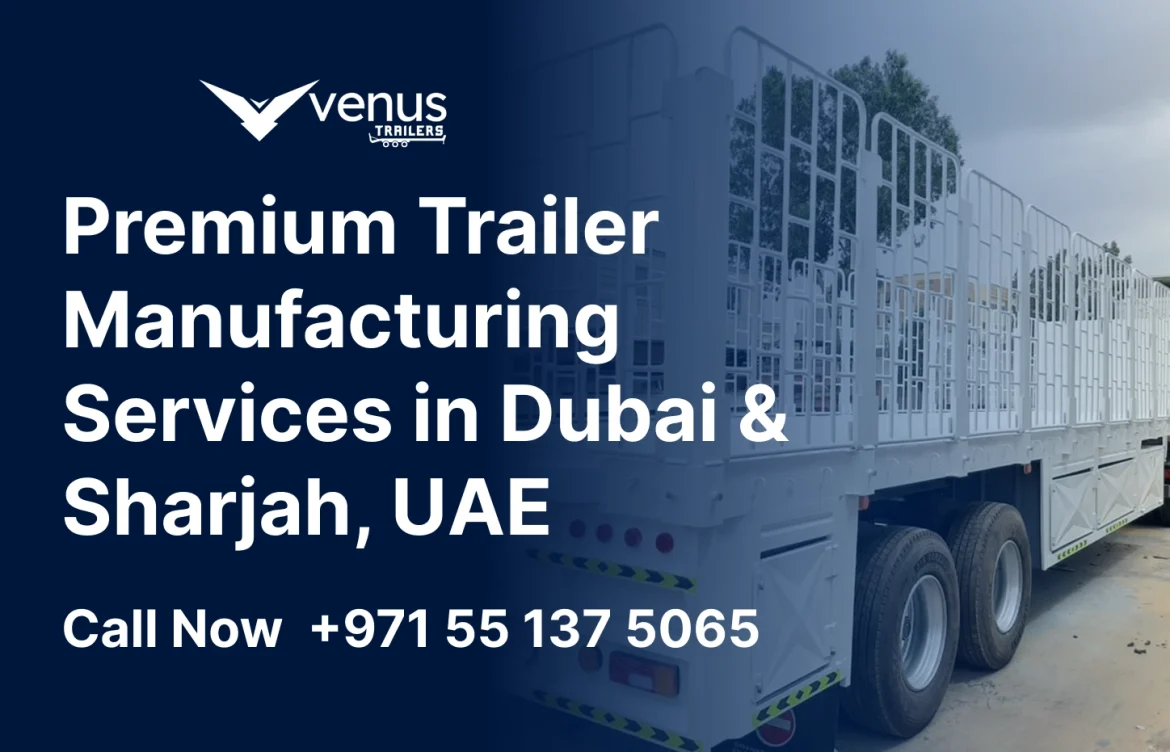
Flatbed Trailers in Sharjah | Features, Uses & Advantages Guide
Flatbed Trailers in Sharjah – Features, Uses, and Advantages
When it comes to heavy and oversized cargo transport, flatbed trailers in Sharjah are among the most reliable and versatile solutions available in the UAE. From construction contractors in Dubai to oil & gas operators in Abu Dhabi and port logistics teams in Sharjah, businesses depend on heavy-duty flatbed semi trailers to move large, irregular, and industrial loads safely and efficiently.
As one of the UAE’s leading industrial hubs, Sharjah plays a central role in trailer manufacturing UAE, offering direct access to ports, highways, and major commercial centers. Companies such as Venus Trailers, a trusted commercial trailer manufacturer, design and fabricate flatbed trailers engineered specifically for GCC climate conditions, RTA regulations, and demanding heavy transport applications.
This comprehensive guide explains the engineering features, practical uses, technical specifications, purchasing considerations, and long-term advantages of investing in high-quality flatbed trailers in Sharjah.
What Is a Flatbed Trailer?
A flatbed trailer is an open-deck trailer platform without fixed sides or a roof. This simple but highly functional design allows loading from the front, rear, or sides using cranes, forklifts, or ramps. For businesses handling oversized steel sections, equipment, prefabricated concrete, or containers, this flexibility is critical to operational efficiency.
Unlike enclosed box trailers or curtain side trailers, flatbeds are specifically designed for cargo that:
- Exceeds standard width or height limits (within legal transport regulations)
- Requires crane loading
- Is irregularly shaped
- Does not require weather protection
- Must be loaded and unloaded quickly at multiple job sites
Flatbed trailers are typically built as semi trailers, connected to a tractor unit via a kingpin system and fifth wheel coupling. Depending on load requirements, they may be fabricated with 2, 3, or multi-axle configurations for higher payload capacity and improved weight distribution.
Why Sharjah Is a Hub for Flatbed Trailer Manufacturing
Sharjah has emerged as a strategic center for trailer engineering and fabrication in the UAE. The emirate offers strong industrial infrastructure, proximity to Port Khalid and Hamriyah Port, and seamless connectivity to Dubai, Abu Dhabi, Ajman, Ras Al Khaimah, Fujairah, and Umm Al Quwain.
Key Advantages of Manufacturing in Sharjah
- Compliance with UAE RTA and GCC regulations
Local manufacturers understand axle load restrictions, braking standards, lighting requirements, and dimensional compliance. - Customization for Gulf Climate
Trailers are engineered to withstand extreme heat, sand exposure, and long highway operations across the UAE. - Faster Lead Times
Compared to importing trailers, local production reduces delivery time and allows better after-sales support. - Cost Efficiency
Freight savings, easier spare parts sourcing, and localized service reduce long-term ownership costs.
As a specialist trailer supplier UAE, Venus Trailers manufactures flatbed trailers alongside skeletal trailers, low bed trailers, fuel tank trailers, water tank trailers, cement bulkers, and fully customized industrial transport equipment.
Key Engineering Features of Flatbed Trailers in Sharjah
High-quality flatbed trailers are more than just steel platforms. They incorporate advanced structural design, load engineering, braking safety systems, and suspension technology to ensure durability and compliance.
1. Heavy-Duty Steel Chassis Construction
The core of any flatbed trailer is its chassis. Reputable trailer manufacturing UAE facilities use:
- High-tensile structural steel
- Reinforced I-beam or fabricated main beams
- Cross-member strengthening for load distribution
- Robotic or certified welding processes
This ensures structural rigidity while minimizing long-term fatigue cracking, especially important for heavy equipment transport and industrial usage.
2. Optimized Load Bearing Capacity
Flatbed trailers are available in multiple axle configurations:
- 2-Axle Flatbed – Ideal for medium loads
- 3-Axle Flatbed – Common in the UAE for construction materials
- Multi-Axle Configurations – Used for high payload or specialized industrial loads
More axles improve weight distribution and compliance with UAE road weight regulations.
3. Advanced Suspension Systems
Depending on application, trailers may use:
- Mechanical (leaf spring) suspension
- Air suspension systems
- Heavy-duty bogie suspension
Air suspension improves stability on highways between Sharjah, Dubai, and Abu Dhabi, especially for long-haul operations.
4. Braking and Safety Systems
Professional flatbed trailers include:
- ABS braking systems
- EBS (optional for advanced fleets)
- High-performance brake chambers
- RTA-compliant lighting systems
- Reflective safety markings
Safety compliance is not optional in UAE commercial transport—it is mandatory.
5. Customizable Dimensions and Specifications
Custom trailer design options include:
- Deck length (12m, 13.6m, or custom)
- Extendable flatbeds
- Reinforced floor options
- Container locking systems
- Side rails or removable posts
- Specialized axle brands
This flexibility allows businesses to align trailer engineering with operational requirements.
Typical Technical Specifications (Standard 3-Axle Flatbed)
| Specification | Typical Range |
|---|---|
| Overall Length | 12,000 – 13,600 mm |
| Deck Width | 2,500 mm |
| Axles | 3 Axles (12–13T each) |
| Suspension | Mechanical or Air |
| Chassis Material | High-tensile steel |
| Braking System | ABS with dual line |
| Landing Gear | Heavy-duty two-speed |
| Payload Capacity | 40–60 tons (depending on configuration) |
Specifications may vary based on custom fabrication and regulatory requirements.
Common Applications of Flatbed Trailers in Sharjah
Flatbed trailers support multiple industries across the UAE. Their versatility makes them indispensable in both private and government projects.
1. Construction and Infrastructure
Dubai and Abu Dhabi continue to expand highways, bridges, residential towers, and industrial zones. Flatbed trailers are used to transport:
- Steel reinforcement bars
- Concrete beams and panels
- Structural steel frames
- Scaffolding
- Precast components
Without side restrictions, cranes can quickly load and unload heavy construction materials.
2. Oil & Gas and Energy Sector
Oilfields and refineries require reliable heavy equipment transport solutions. Flatbeds carry:
- Pipes and tubular goods
- Drilling equipment
- Industrial skid units
- Generators
- Compressors
Heavy-duty trailer engineering ensures stability and safety in long-distance transport across the Emirates.
3. Port Logistics and Container Movement
Sharjah’s proximity to major ports makes skeletal and flatbed trailers vital for container movement. While skeletal trailers specialize in container locks, flatbeds offer flexibility when moving oversized cargo or breakbulk goods.
4. Industrial Equipment and Machinery Transport
Flatbeds allow forklifts, tractors, compactors, and other machinery to be driven directly onto the trailer deck. For heavier equipment, low bed trailers may be more suitable, but flatbeds remain the preferred choice for mid-weight machinery.
5. Government and Infrastructure Projects
Municipalities and government contractors across UAE emirates rely on industrial trailers for transporting materials to remote project sites. Custom-built flatbeds provide reinforced options for demanding applications.
Advantages of Flatbed Trailers in Sharjah
1. Maximum Loading Flexibility
The open design eliminates dimensional constraints from side walls and roofs. This ensures faster turnaround times at job sites and ports.
2. Lower Maintenance Complexity
Flatbed trailers have fewer moving components compared to enclosed trailers or specialized bodies. This reduces maintenance costs and downtime.
3. High Return on Investment
A well-engineered heavy duty trailer can operate for many years under proper maintenance. The durability of locally fabricated trailers improves lifecycle value.
4. Adaptable Across Industries
Instead of investing in multiple specialized trailers, companies often rely on flatbeds to handle varied transport requirements.
5. Built for UAE Climate
Sand, heat, and long highway use require corrosion-resistant coatings and reinforced structural components. Local trailer fabrication ensures adaptation to regional conditions.
Flatbed vs. Other Trailer Types: When to Choose What?
| Trailer Type | Best For | Limitations |
|---|---|---|
| Flatbed Trailer | Oversized cargo, steel, machinery | No weather protection |
| Skeletal Trailer | Container transport | Limited to containerized loads |
| Low Bed Trailer | Heavy machinery, tall equipment | More expensive |
| Box Trailer | Palletized goods | Limited for oversized loads |
| Curtain Side Trailer | Rapid side loading | Less suitable for extreme heavy loads |
Selecting the correct trailer type depends on cargo profile, route, and compliance requirements.
How to Choose the Right Flatbed Trailer in the UAE
Before purchasing from a commercial trailer manufacturer, procurement teams should evaluate:
1. Payload Requirements
Calculate maximum legal axle load and operational weight distribution. Always consider safety margins.
2. Route Conditions
Highway transport between Dubai and Abu Dhabi differs from industrial zone operations in Sharjah. Suspension selection should reflect usage.
3. Regulatory Compliance
Ensure the trailer complies with UAE RTA and GCC transport regulations regarding dimensions, braking, and safety features.
4. Manufacturer Reputation
Choose an experienced trailer manufacturing UAE company with proven expertise, certified welding standards, and after-sales support.
5. Custom Engineering Needs
If transporting specialized industrial equipment, opt for custom trailer design instead of modifying a standard unit later.
Maintenance Best Practices for Long-Term Performance
Proper maintenance significantly extends the operational life of flatbed trailers in Sharjah.
- Conduct regular brake and ABS inspections.
- Check tire pressure weekly to prevent uneven wear.
- Inspect welding joints for stress cracks.
- Lubricate landing gear and mechanical components.
- Monitor suspension alignment.
- Verify load securing systems before every trip.
Implementing preventive maintenance reduces breakdowns and improves fleet transport solutions efficiency.
Why Work with Venus Trailers?
Venus Trailers is an established commercial trailer manufacturer serving Dubai, Sharjah, Abu Dhabi, and the wider UAE. The company provides:
- Heavy-duty flatbed trailers
- Semi trailers with custom configurations
- Complete trailer engineering and fabrication
- Skeletal, low bed, tipper, box, and tanker trailers
- Custom-built industrial transport equipment
Each trailer is engineered to meet UAE roads, climate, and regulatory demands. The company combines structural integrity, safety compliance, and operational practicality to deliver reliable fleet assets.
Conclusion
For businesses requiring versatile, durable, and high-capacity transport equipment, flatbed trailers in Sharjah remain one of the smartest investments in the UAE logistics sector. Their open-deck design, heavy-duty engineering, and adaptability across industries make them essential for construction, ports, oil & gas, industrial operations, and government projects.
By partnering with a trusted trailer supplier UAE such as Venus Trailers, companies can access custom-built, regulation-compliant, and climate-adapted trailers that deliver long-term operational value. Whether expanding a fleet or replacing aging equipment, selecting the right flatbed trailer improves efficiency, safety, and return on investment.
Frequently Asked Questions (FAQs)
1. What are flatbed trailers in Sharjah commonly used for?
Flatbed trailers in Sharjah are widely used for transporting construction materials, steel sections, machinery, containers, and industrial equipment. Their open platform allows loading from multiple sides, which is ideal for crane-based operations. Logistics companies, contractors, oil & gas operators, and government entities across the UAE rely on flatbeds for oversized and irregular cargo that does not require enclosure.
2. What is the typical load capacity of a flatbed trailer in the UAE?
A standard 3-axle flatbed semi trailer in the UAE typically supports 40 to 60 tons, depending on axle rating, suspension type, and chassis design. However, the actual permissible load must comply with UAE RTA weight regulations. Always consult a professional trailer manufacturing UAE company to ensure the configuration aligns with legal and operational requirements.
3. Are flatbed trailers suitable for heavy equipment transport?
Yes, flatbed trailers are commonly used for medium to heavy equipment transport such as forklifts, compact machinery, and generators. For extremely heavy or tall machinery, a low bed trailer may be more appropriate due to its lower deck height and enhanced stability. Selecting the correct trailer depends on equipment dimensions and weight.
4. How do I choose between a flatbed and a skeletal trailer?
A skeletal trailer is specifically designed for container transport and includes twist locks for securing ISO containers. A flatbed trailer offers more versatility and can transport containers, steel, or irregular cargo. If your operations primarily involve containerized freight from ports like Port Khalid, skeletal trailers may be sufficient. If your cargo varies, flatbeds provide greater flexibility.
5. What maintenance is required for flatbed trailers in UAE climate conditions?
Due to high temperatures and dust exposure, regular inspection is critical. Check brake systems, suspension components, welding joints, and tires routinely. Corrosion-resistant coatings should be inspected annually. Working with a reliable trailer supplier UAE ensures access to spare parts and professional servicing.
6. Can flatbed trailers be customized?
Yes, custom trailer design is common in the UAE. You can modify deck length, axle configuration, suspension type, braking systems, and load-securement features. Professional trailer engineering ensures that modifications maintain structural integrity and compliance with UAE regulations.
7. Why should I buy from a local trailer manufacturer in Sharjah?
Purchasing from a local commercial trailer manufacturer in Sharjah ensures faster delivery, regulatory compliance, accessible after-sales support, and better long-term cost control. Local manufacturers understand UAE load laws and climate conditions, which reduces operational risks and improves durability.
Request a Free Trailer Consultation
If you are planning to invest in flatbed trailers or expand your fleet, Venus Trailers offers professional consultation and engineering support. Our team provides expert guidance on trailer selection, custom trailer design, and regulatory compliance to match your operational requirements.
We proudly serve customers across Dubai, Sharjah, Abu Dhabi, and the wider UAE, delivering reliable, heavy-duty transport solutions for construction, logistics, industrial, and government sectors.
Contact Venus Trailers today to discuss your project and request a detailed quotation tailored to your business needs.